

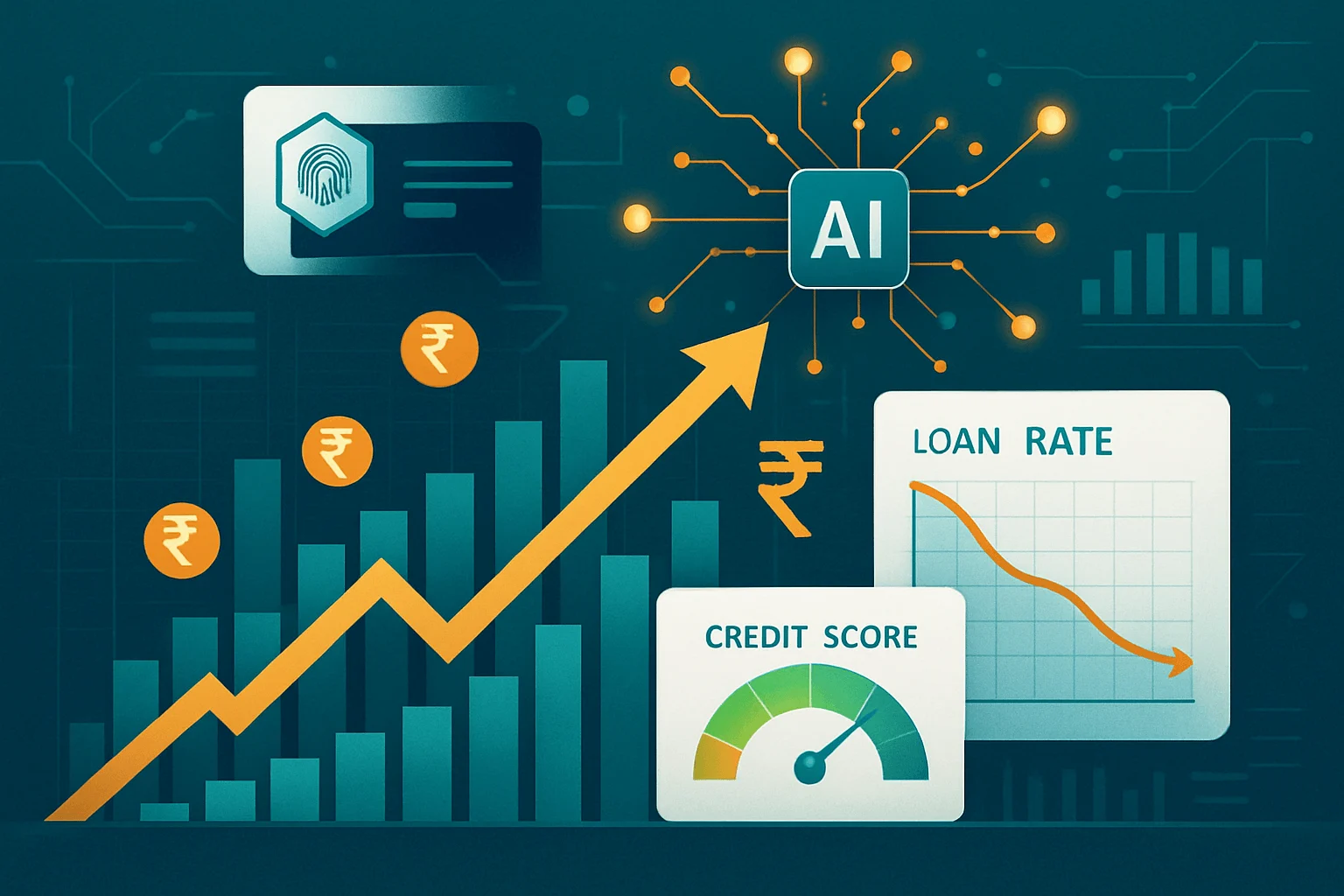
Let’s be real for a second — if you drive for Uber, deliver groceries, or freelance on Upwork, you’ve probably felt the sting of a traditional credit check. You know the drill: a bank asks for pay stubs, you hand over your 1099 forms, and they still say “insufficient credit history.” It’s frustrating. Honestly, it’s like being judged by a rulebook written for a completely different game. But here’s where things get interesting — AI credit scoring is flipping that script. And for gig workers, it might just be the financial lifeline they’ve been waiting for.
The Old System: A Square Peg in a Round Hole
Traditional credit scoring — think FICO or VantageScore — relies heavily on steady employment, long credit histories, and predictable income. That works fine if you’ve got a 9-to-5 job with a W-2. But for gig workers? Your income might be solid, but it’s also lumpy. One month you’re flush, the next you’re scraping by. Banks see that volatility and hit the brakes. They can’t model it easily. So they default to “no” — or worse, predatory rates.
It’s a bit like trying to fit a square peg into a round hole. The peg isn’t broken — the hole is just too narrow. That’s where AI comes in. It doesn’t just look at your credit score; it looks at your behavior.
How AI Credit Scoring Actually Works (Without the Jargon)
So, what’s the deal with AI credit scoring? Well, instead of just checking your FICO score, these algorithms analyze thousands of data points. Things like:
- Your bank transaction history — how often money comes in, and from where.
- Payment patterns for utilities, rent, or even subscription services.
- Your digital footprint — maybe even your social media activity (yep, some lenders do this).
- Cash flow consistency, not just total income.
The AI doesn’t care if you worked 60 hours last week and 20 the next. It cares about your trend. It learns your rhythm. For example, if you consistently pay your Netflix bill on time and your rent is never late, that’s a positive signal. It’s like the algorithm is saying, “Hey, this person might not have a salary, but they’re reliable.”
But Wait — Is It Fair?
That’s the million-dollar question, right? AI can be biased — we’ve seen that in hiring and policing. But here’s the thing: when trained properly, AI can actually reduce bias compared to human loan officers. It doesn’t care about your zip code or your last name. It only cares about patterns. Still, there are risks. If the training data is skewed, the AI might penalize gig workers who use cash or have thin banking histories. It’s not perfect — but it’s a huge step up from the old system.
The Gig Economy’s Pain Points — and How AI Eases Them
Let’s talk about the real struggles gig workers face. You know, the ones that keep you up at night. Maybe you need a car loan to replace your beat-up Honda, but the bank wants two years of tax returns. Or you’re trying to get a mortgage, but the underwriter treats your DoorDash income like Monopoly money. It’s exhausting.
AI credit scoring tackles these pain points head-on. Here’s how:
- Faster approvals: AI can process your application in minutes, not weeks. It pulls data in real-time.
- Higher approval rates: Studies show that AI-driven models approve up to 30% more gig workers than traditional methods.
- Dynamic pricing: Instead of a one-size-fits-all interest rate, AI offers rates based on your actual risk profile — which can be lower for reliable earners.
- Alternative data: Things like your gig platform rating (e.g., 4.9 stars on Uber) can count as a positive signal.
It’s not a magic bullet, but it’s a serious upgrade. Think of it like switching from a flip phone to a smartphone — same basic function, but way more intuitive.
Real-World Examples: Who’s Using This?
A few fintech companies are already leading the charge. For instance, Upstart uses AI to approve loans for freelancers by analyzing education, job history, and even the type of gig work. Lenddo (now part of Credify) uses social media data and behavioral signals. And Kabbage (now part of American Express) looks at your business cash flow — perfect for gig workers who treat their side hustle like a small business.
Even traditional banks are starting to catch on. JPMorgan Chase, for example, has experimented with AI models that factor in gig income. It’s slow moving, sure, but the momentum is real.
A Quick Comparison: Traditional vs. AI Credit Scoring
| Factor | Traditional Scoring | AI Scoring |
|---|---|---|
| Income verification | W-2s, pay stubs | Bank transactions, platform data |
| Credit history | Must be 3+ years | Can work with 6 months |
| Employment type | Prefers full-time | Accepts gig, freelance, part-time |
| Approval speed | Days to weeks | Minutes to hours |
| Bias risk | Human bias (zip code, race) | Algorithmic bias (if data is flawed) |
See the difference? It’s not just faster — it’s fundamentally more inclusive. That said, it’s not a free-for-all. You still need to show some financial responsibility. But the bar is lower, and the path is clearer.
The Dark Side: Privacy and Algorithmic Creep
Alright, let’s not sugarcoat it. AI credit scoring has a shadow side. For one, it raises serious privacy concerns. Do you really want a bank scanning your Venmo history or your Instagram likes? Probably not. And there’s the risk of “algorithmic creep” — where the AI starts making decisions based on things that have nothing to do with creditworthiness, like your shopping habits or the time of day you make transactions.
Also, if the algorithm is a black box, you might never know why you were denied. That’s a problem. In the U.S., the Equal Credit Opportunity Act requires lenders to explain denials, but AI models can be so complex that even the developers struggle to explain them. It’s a bit like asking a chef to explain why a soufflé fell — sometimes the reasons are just… messy.
So, what’s the fix? Regulation, transparency, and third-party audits. Some states are already pushing for “algorithmic accountability” laws. It’s a work in progress.
What Gig Workers Should Do Right Now
If you’re a gig worker looking to benefit from AI credit scoring, here’s some practical advice — stuff you can actually use:
- Keep a separate bank account for your gig income. It makes transaction analysis cleaner.
- Pay bills on time — even small ones. AI notices patterns, not just amounts.
- Link your gig platforms to financial apps like Plaid or Yodlee. This gives lenders a fuller picture.
- Check your credit report regularly. AI models still use traditional data too.
- Be cautious with data sharing. Only use lenders that are transparent about what they collect.
Honestly, the biggest shift is mindset. You’re not “unbankable” — you’re just waiting for a system that understands you. And that system is finally arriving.
The Bottom Line: A New Financial Frontier
AI credit scoring isn’t perfect. It’s not a utopia. But for gig economy workers, it’s a massive leap forward. It sees your hustle, your consistency, your ability to adapt. It doesn’t penalize you for having a non-linear career path. And in a world where nearly 40% of U.S. workers have some form of gig income, that’s not just fair — it’s necessary.
So, next time you apply for a loan and the algorithm gives you a thumbs-up, remember: it’s not magic. It’s just a system that finally learned to look beyond the W-2. And that, my friend, is progress worth celebrating.